
Bunnsies - Happy Pet World
TutoTOONSEducational
4.0148.00 Reviews
- Version
- 1.6.206
- Installs
- 10.00M
- Age Rating
- Everyone
Screenshots
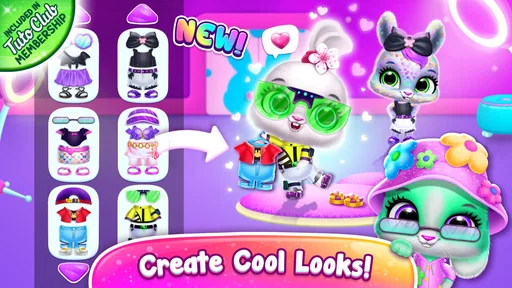
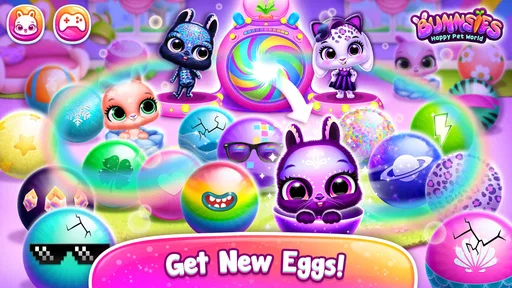
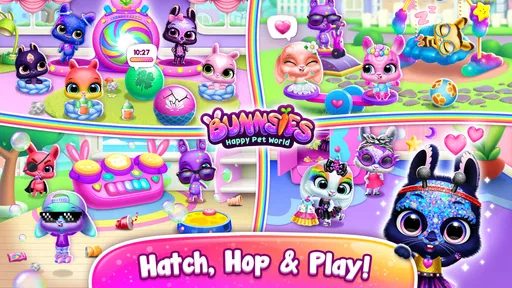
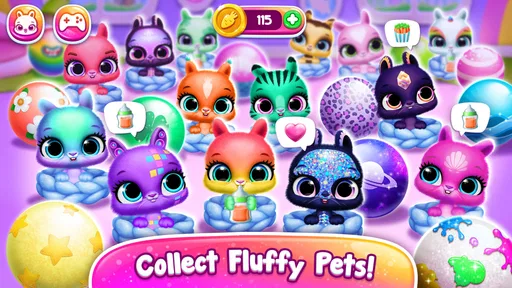
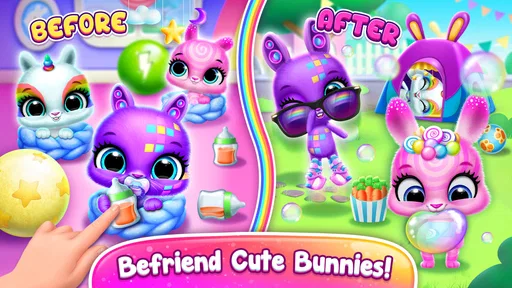
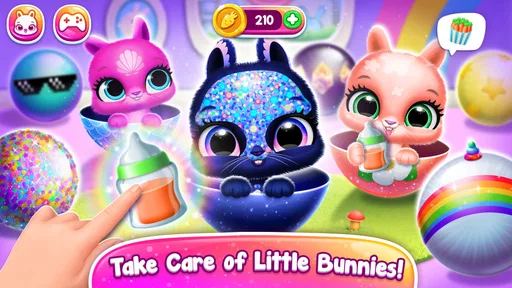
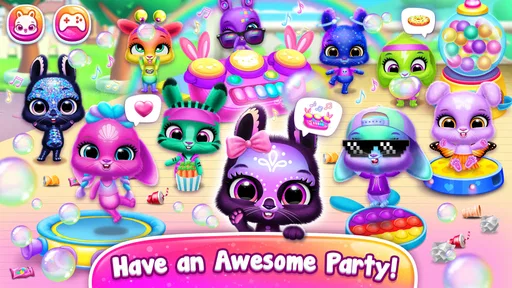
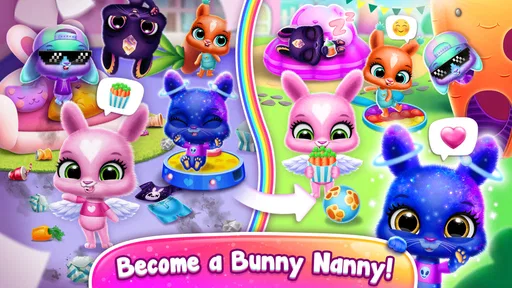
Our Review of Bunnsies - Happy Pet World
 Analysis by Appyee
Bunnsies - Happy Pet World is the kind of educational game I would hand to a child who enjoys caring for virtual animals more than chasing a difficult score. Its central appeal is simple: hatch adorable bunnies, look after them, and spend time with them through pet-focused activities. After using it, I found that its strongest quality is not complexity but approachability. It creates a gentle routine that is easy to understand, while still giving children reasons to return and see what happens next.
The game comes from TutoTOONS, a developer known for child-friendly mobile experiences, and it is available as a free game for Everyone. It belongs to the educational category, although I would describe the learning here as informal rather than classroom-style. Children practice attention, sequencing, responsibility and recognition through repeated care tasks instead of lessons or quizzes. That distinction matters: this is entertainment with light developmental value, not a replacement for a structured learning app.
How the bunny-care loop works in everyday play
The first few minutes are deliberately welcoming. The idea of hatching a bunny gives the experience an immediate sense of anticipation, and the animal itself becomes the reason to explore the rest of the game. Rather than asking a child to understand a complicated menu or a long-term strategy system, the game presents a friendly pet world where actions are easy to connect with their results.
I especially like how the care theme gives the activities a natural order. A child can move from meeting a bunny to looking after it, then to playing with it. That sequence feels more meaningful than a collection of unrelated mini-games because each activity supports the same pretend-pet relationship. The bunnies are not just decorative characters; they provide a reason for the player to keep checking in and trying another activity.
The game is best understood as a short-session experience. It suits a child who wants to play for a few minutes while waiting, relaxing after school or taking a break from a longer activity. The lack of pressure makes it approachable, but it also means that children looking for a deep adventure, demanding puzzles or a competitive challenge may find the experience too gentle.
One useful way to play is to let the child explain what the bunny needs before tapping through the next action. That small pause turns a simple interaction into a conversation about order and responsibility. For example, instead of rushing through every available activity, a parent can ask the child why a pet might need care before play. The game does not need to announce a lesson for this kind of shared play to be useful.
The pet-game format also makes the experience accessible to children who are not yet ready for text-heavy software. Visual cues and familiar animal-care ideas can be easier to follow than written instructions. Parents should still sit nearby at first, especially if the child is unfamiliar with mobile controls, but the basic premise is much less intimidating than a traditional educational game built around exercises.
What makes the activities feel worthwhile
The strongest design choice is the connection between collection and care. Hatching and collecting bunnies gives children a clear reason to explore, while the care activities keep the collection from feeling like a purely visual checklist. Each new animal can become a small point of conversation: what does it look like, what should happen next, and which activity does the child want to try?
This is also where the game can support gentle repetition. Younger players often benefit from doing a familiar task several times, and a virtual pet setting makes repetition feel like play rather than drilling. I would not expect advanced learning outcomes, but I can see value in the way the game encourages children to notice details, remember a routine and make simple choices.
Another practical strength is that the game does not require a child to master a complicated economy before enjoying the core idea. The free starting point makes it easy for a family to test the experience without committing money immediately. That is important for this audience because a child’s interest in a particular theme can change quickly.
At the same time, the collection structure can create a familiar temptation: a child may become more interested in obtaining the next bunny than in the care activities themselves. I recommend setting expectations early. Explain that the free experience is the place to decide whether the game is enjoyable, and that purchases are optional rather than a normal part of every play session.
What parents should know about the cost
The game is free to download and play, but it includes in-app purchases ranging from $1.49 to $159.99 per item. That is a very wide range, so I would not describe the experience as simply “free” without qualification. Free access lets a family try the game and judge its appeal, while the purchase layer means parents should review the device’s buying safeguards before handing it over.
The sensible approach is to treat the free portion as a trial of the game’s main loop. Spend time with the available bunny-care activities, watch whether the child enjoys repeating them, and only then consider whether any paid option offers enough value for your household. I would avoid making a purchase just to prevent a child from feeling disappointed in the moment. The better question is whether the child is still enjoying the care and play elements without being pushed toward collection progress.
The price range also changes the value conversation between children and adults. A small optional purchase may feel very different from a high-cost item, so parents should be the ones making the decision. The game is suitable for Everyone as a content rating, but that does not remove the need for supervision around spending. Age suitability and purchase suitability are separate questions.
I also recommend checking the purchase settings before the first session, rather than waiting until a child asks for something. A calm explanation that digital items cost real money is more useful than an argument after an accidental tap. If the household prefers completely predictable costs, an educational app with a single upfront price or a subscription managed by an adult may be a better fit.
Where the game delivers value
For no initial cost, the game offers a friendly way to introduce a child to virtual pet care and simple interactive routines. Its value is strongest when the goal is low-pressure engagement. A child can enjoy the charm of the bunnies, practice moving through a familiar sequence and use the activities as a springboard for imaginative conversation.
I would also consider it useful as a shared screen-time option. Instead of leaving a child alone with a fast-moving game, a parent can sit beside them and ask questions about the animals. Which bunny should be cared for first? What should happen before play? What changed after the activity? These prompts add value that is not contained in the taps alone.
The collection idea gives the game some staying power for children who like discovering characters. However, the value will vary greatly from one player to another. A child who loves animals and repetition may return often, while a child who needs constant novelty may move on quickly. That is why I would judge the game by the quality of the child’s engagement, not by the number of available purchase opportunities.
Compared with a conventional educational app, Bunnsies is less direct. It does not present itself as a focused tool for reading, arithmetic or language practice. Its learning value comes through routine, observation and pretend care. If your priority is measurable academic practice, a dedicated learning app is likely to provide clearer progress. If your priority is a soft introduction to responsibility and interactive decision-making, this game makes more sense.
Compared with a typical virtual-pet game, its educational positioning makes the care loop feel more suitable for younger players. The trade-off is that older children may find the experience less demanding than a game with deeper customization, exploration or strategy. I would choose it for calm, accessible play rather than for long-term mastery.
Trade-offs that affect the decision
The biggest limitation is also part of the game’s identity: simplicity. The accessible design helps a young player begin quickly, but it may leave experienced mobile players wanting more variety or challenge. I would not recommend it to someone searching for a complex management game, an open-ended adventure or a competitive title with difficult goals.
The second trade-off is between collecting and caring. Collection systems can be motivating, but they can also shift attention toward “getting the next thing.” Parents who want the educational side to matter should guide the session toward the care activities rather than treating every new bunny as a reward that must be purchased or unlocked immediately.
The third trade-off concerns spending. The game’s free entry is convenient, yet the presence of items across a broad price range demands adult oversight. A family that is comfortable managing optional digital purchases may appreciate the chance to choose. A family that wants a completely closed experience may feel more comfortable with an app that has no in-app purchase layer.
There is also a difference between independent play and guided play. A child who already understands mobile games may move around comfortably, but younger children can get more from it when an adult turns the actions into a conversation. Without that support, the experience may remain pleasant but shallow. With it, the same activities can encourage language, sequencing and empathy in a natural way.
One concrete tip is to use the game as a transition activity instead of an unlimited background distraction. A short bunny-care session after homework or before a quiet bedtime routine can give it a clear place in the day. I would avoid presenting it as a reward for every task, because that can make the collection element feel more important than the play itself.
Who will get the most from it
This game is a good match for younger children who enjoy cute animals, pretend care and simple touch-based activities. It can also work well for siblings or a parent and child who want something easy to discuss together. The familiar pet theme lowers the barrier to entry, while the hatching and collecting elements give children a reason to explore beyond the first interaction.
It is particularly suitable for families looking for a gentle educational game rather than formal instruction. If your child is practicing patience, following a sequence or learning to talk about another creature’s needs, the game can support those conversations. I would describe that as a useful side benefit, not a promise of academic progress.
It is less suitable for children who become frustrated by optional content they cannot immediately access, or for parents who do not want to manage in-app purchase requests. It is also not my first choice for an older child who wants strategic depth, challenging puzzles or a story-driven game. In those cases, a more advanced title in the relevant category will probably hold attention better.
The game has reached over ten million installs and holds an average rating of 4.0 from around 6.9 thousand ratings, which suggests that it has found a substantial audience while still leaving room for mixed experiences. I would read that as a reason to try the free version, not as proof that every child will enjoy it. Children respond very differently to repetition, collection and virtual pets.
On the technical side, the current version is 1.6.206 and it requires Android 7.0 or later. That makes the compatibility requirement worth checking before installation on an older device. The developer is TutoTOONS, and the game was released on March 1, 2023. Those details help place it as an established title rather than something that has only just appeared, but they do not change the more important question: does its calm pet-care loop suit the child using it?
My verdict for families deciding today
I recommend giving Bunnsies a try if you want a free starting point for cute, low-pressure pet play with a light educational angle. Its best moments come from the relationship between hatching, caring and playing, especially when an adult uses the actions to encourage a child to describe choices and routines. The game is easy to approach, and that matters more than complexity for its intended audience.
I would skip it if you want a focused academic tool, a purchase-free environment or a demanding game with substantial strategy. The optional purchase system means parents need to stay in control, and the simple design will not satisfy every age group. Those are not small details; they define whether the game feels convenient or limiting in your home.
My final view is positive but measured. The free access makes testing straightforward, the bunny theme is genuinely inviting, and the care loop can support thoughtful shared play. Its value is highest when you treat it as a gentle activity rather than a full learning curriculum or an endlessly expanding collection. Try the free experience first, supervise spending, and judge success by the quality of the child’s play rather than by how many bunnies are collected.
Verdict
Strengths of Bunnsies - Happy Pet World
- Adorable creatures make the game appealing to younger players.
- Simple controls are easy for children and casual players to understand.
- Short activities suit quick play sessions on mobile devices.
- Caring for pets creates a gentle, relaxing gameplay experience.
- Bright visuals and cheerful animations make the world inviting.
Limitations of Bunnsies - Happy Pet World
- Progress may feel repetitive after completing the same care routines.
- Some content or items may require in-app purchases to unlock.
- Frequent prompts can encourage children to request purchases.
- The game may need a stable connection for certain features.
- Younger players may need supervision because of ads or purchases.
Other Releases by TutoTOONS
View All
Fluvsies - A Fluff to Luv
Educational4.1

Sweet Baby Girl Cleanup 5
Educational3.8

Smolsies - My Cute Pet House
Educational4.1

Power Girls - Fantastic Heroes
Educational3.9
Similar Picks in This Category
View All
Little Panda Policeman
BabyBus4.0

Monster Trucks Game for Kids 2
Raz Games4.1

Little Panda's Chinese Recipes
BabyBus4.4

Little Panda's Restaurant
BabyBus4.4

Little Panda's Ice Cream Games
BabyBus4.3

Baby Panda Care
BabyBus3.8
Frequently Asked Questions
What is Bunnsies - Happy Pet World?
Bunnsies - Happy Pet World is a casual virtual-pet game focused on raising adorable bunny characters in a colorful, child-friendly world. You can care for your pets, feed them, play mini-games, decorate their surroundings, and discover new items. The experience is relaxed and accessible, making it suitable for players who enjoy collection, customization, and nurturing gameplay rather than fast-paced competition.
How do you take care of the bunnies in the game?
Taking care of the bunnies involves several everyday activities, including feeding them, keeping them clean, playing with them, and responding to their needs. Regular interaction helps keep the pets happy and gives the game a more personal feel. Different activities and rewards encourage you to return frequently, although the exact routines and available options may vary as you unlock additional content.
Is Bunnsies - Happy Pet World free to download and play?
The game is generally available as a free download, allowing players to begin caring for virtual bunnies without paying upfront. However, free-to-play features may include optional in-app purchases, such as cosmetic items, extra resources, or faster progress. It is a good idea to review the store listing and your device’s purchase settings, especially if children will be playing.
Is the game suitable for children?
Bunnsies - Happy Pet World uses cute visuals, simple interactions, and gentle pet-care mechanics that can appeal to younger players. Nevertheless, parents should check the age rating, advertising settings, and in-app purchase options before installation. Depending on the device version and region, the game may include ads or links to other content, so parental supervision and purchase restrictions are recommended.
Can Bunnsies - Happy Pet World be played offline?
Some basic pet-care activities may work without a constant internet connection, but offline availability can depend on the device, installed version, and the specific feature being used. Advertisements, updates, cloud-related functions, and certain rewards may require internet access. For the smoothest experience, launch the game online after installing it and check which activities remain available when the connection is disabled.
Play our best games!


